
"Puerto Rican coffee flavor"
500 article(s) found

Introduction to the characteristics of the manor producing area with a unique flavor of Puerto Rican coffee
In 1898, the Spanish-American War broke out and Spain was defeated. According to the Treaty of Paris, Puerto Rico was ceded to the United States. The administrative jurisdiction of the United States over Puerto Rico first took the form of a military junta. During its two years of governance of the island, the junta established schools, roads, railways, hospitals and health facilities. In 1900, the United States Congress established civilian control over the island. The Governor, the Cabinet and

Unique taste of Puerto Rican coffee taste manor boutique coffee beans introduction
In 1898, the Spanish-American War broke out and Spain was defeated. According to the Treaty of Paris, Puerto Rico was ceded to the United States. The administrative jurisdiction of the United States over Puerto Rico first took the form of a military junta. During its two years of governance of the island, the junta established schools, roads, railways, hospitals and health facilities. In 1900, the United States Congress established civilian control over the island. The Governor, the Cabinet and

Puerto Rican Coffee Flavor description characteristics of producing area introduction of boutique coffee beans in manor
Puerto Rico, as a territory outside the territory of the United States, is rarely heard of, and most people may know that it is a tourist resort rich in Miss World. As one of the few island countries in the Caribbean, the country, which the Spaniards call the port of wealth, had a blank history before Columbus discovered the New World. Yaoke Yauco is an area of 176.5 square meters in the south of Poland.

Puerto Rican coffee boutique coffee
In 1736, coffee trees were introduced from Martinique to PuertpRico. Most of the early coffee was grown by immigrants from Corsica. By 1896, Puerto Rico was the sixth largest exporter of coffee in the world, with most coffee shipped to France, Italy, Spain and Cuba. Coffee farms flourished in the 19th century, but sugar cane and drug farming
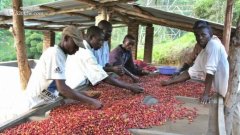
Puerto Rican coffee beans from the world's finest coffee production area
In 1736, coffee trees were introduced from Martinique to Puertp Rico. Most of the early coffee was grown by immigrants from Corsica. By 1896, Puerto Rico was the sixth largest exporter of coffee in the world, with most coffee shipped to France, Italy, Spain and Cuba. Coffee farms flourished in the 19th century, but the rise of sugarcane and drug farming

Description of the flavor of pure and aromatic Puerto Rican coffee introduction to the characteristics of high-quality coffee in producing areas
Puerto Rico's coffee beans are carefully planted, pure, aromatic and heavy, of which the best coffee is Yauco Selecto, which means Selecto. Yaocote Coffee is grown only on three farms in the southwest of the island, San Pedro, Caracolillo and La Juanita. It is a truly high-quality coffee with a strong flavor and a long aftertaste. Puerto Rico
Puerto Rican coffee producing area Puerto Rico coffee bean flavor
In the coffee industry, when it comes to coffee from the island, I think you must be no stranger to the Blue Mountains of Jamaica and Kona of Hawaii, which are famous boutique coffee. In fact, if we talk about coffee from island origin, there is another kind of coffee that is worth talking about and tasting, and that is Puerto Rico. If you look for its location on the earth, it may not be easy to find. Let's learn about it together.

Introduction to Puerto Rican coffee with strong aroma and long aftertaste
Puerto Rican coffee has been exported to all parts of the world. As the coffee in this country is generally carefully cultivated, it is pure, fragrant and granular, among which the best is among the world's famous brands. The best coffee is Yauco Selecto, which means Selecto. Grand Lares Yauco is produced in the southwest of the island, Larez.
Introduction of Puerto Rican coffee with strong flavor and taste of fine coffee beans in the manor
Puerto Ricans are the general name of the residents of United States Puerto Rico in Central America and the Caribbean. There are about 3.4 million people (1979). Spanish and English are widely used. More Catholic. The earliest inhabitants of Puerto Rico were Arawak and Caribbean Indians. In 2012, whites of European origin accounted for about 73% of the population, mixed-race people accounted for 23%, and blacks accounted for 4%. There are more than 20,000 Americans and others.

Introduction to the unique taste of Puerto Rican coffee, the characteristics of the manor producing area, fine coffee beans
The current Governor Alejandro Garcia Patia (Alejandro Garcia Padilla San Juan San Juan), people's Democratic Party. Born in Puerto Rico on August 3, 1971, he received a bachelor's degree in political science and economics from the University of Puerto Rico and a law degree from the Pan American University of Puerto Rico. Professional lawyer. Zeng Renbo, assistant judge of the Court of Appeal and professor of law at the Pan American University of Puerto Rico

Introduction to Puerto Rican coffee with pure, fragrant and granular flavor and taste of manor boutique coffee
Puerto Rico's coffee beans are carefully planted, pure, aromatic and heavy, of which the best coffee is Yauco Selecto, which means Selecto. Yaocote Coffee is grown only on three farms in the southwest of the island, San Pedro, Caracolillo and La Juanita. It is a truly high-quality coffee with a strong flavor and a long aftertaste. Puerto Rico

Caribbean Coffee | Puerto Rico | San Pedro Manor San Pedro AA washing bourbon, tin
Professional coffee knowledge exchange more coffee bean information please follow the coffee workshop (Wechat official account cafe_style) Le Bihai Coffee | Puerto Rico | San Pedro San Pedro Manor AA washed bourbon, tin truck flavor? The whole history of coffee in the Caribbean has a lot to do with the reclamation of Spain. Coffee was not so important in the 18th century.

Introduction of rich fragrant Puerto Rican coffee grinding scale varieties taste manor production area
Features of Puerto Rico coffee: Yaocote is a fascinating coffee with a complete flavor, no bitterness, nutritious, fruity and worth tasting. Even Thales in Harrogate, UK, has imported 50 bags of Yaoke specialty coffee. Flavor: full granule, full flavor, rich aroma suggested baking method: medium baking ★★★

Taste of Puerto Rican Coffee Larez Yaoke Coffee is introduced in the manor area.
In Spanish, Puerto Rico means the port of wealth. The history of coffee in Puerto Rico dates back to 1736, when coffee seedlings were brought into the country by early Spanish settlers. In the 18th world, sugar cane was the main economic crop, so little attention was paid to it. At the beginning of the 19th century, the French began to move from the Mediterranean island of Corsica because of European politics.

Puerto Rican Coffee Flavor description Grinding degree treatment characteristics introduction of high-quality coffee beans in producing areas
Puerto Rico, as a territory outside the territory of the United States, is rarely heard of, and most people may know that it is a tourist resort rich in Miss World. As one of the few island countries in the Caribbean, the country, which the Spaniards call the port of wealth, had a blank history before Columbus discovered the New World. Yaoke Yauco is an area of 176.5 square meters in the south of Poland.

Puerto Rican coffee producing area Puerto Rico coffee bean flavor
In the coffee industry, when it comes to coffee from the island, I think you must be no stranger to the Blue Mountains of Jamaica and Kona of Hawaii, which are famous boutique coffee. In fact, if we talk about coffee from island origin, there is another kind of coffee that is worth talking about and tasting, and that is Puerto Rico. If you look for its location on the earth, it may not be easy to find. Let's learn about it together.

Puerto Rico Coffee Manor Flavor and Taste characteristics Fine Coffee beans introduction to San Pedro Manor
On September 23, 1869, the people of Puerto Rico were in R. Under the leadership of Emmetrio Betons, an uprising (known as the voice of Larez in history) was carried out in the town of Larez, which announced the establishment of a republic on the 24th and was later suppressed by the Spanish colonial army. After a long struggle, Puerto Rico was finally granted local self-government by Spain. However, from then on, after the Spanish-American War, the island became

Pure and fragrant Puerto Rican coffee beans introduce boutique Larez Yaoke coffee
In 1736, the first coffee tree was introduced to Puerto Rico from Martinique. Since then, Puerto Rico has become the base for producing the highest quality coffee in the world. The unique taste chosen by Yaocote has also become the object of admiration of coffee experts all over the world. Most of the earliest coffee trees were planted by immigrants from Corsica. About 160 years later, the coffee industry in Puerto Rico has emerged

Introduction to the flavor and taste of the fragrant and grainy Puerto Rican coffee manor
Puerto Ricans are the general name of the residents of United States Puerto Rico in Central America and the Caribbean. There are about 3.4 million people (1979). Spanish and English are widely used. More Catholic. The earliest inhabitants of Puerto Rico were Arawak and Caribbean Indians. In 2012, whites of European origin accounted for about 73% of the population, mixed-race people accounted for 23%, and blacks accounted for 4%. There are more than 20,000 Americans and others.

The taste of Puerto Rican coffee is strong and fragrant. The taste of boutique coffee beans in the manor area is introduced by Larley.
In 1736, the first coffee tree was introduced to Puerto Rico from Martinique. Since then, Puerto Rico has become the base for producing the highest quality coffee in the world. The unique taste chosen by Yaocote has also become the object of admiration of coffee experts all over the world. Most of the earliest coffee trees were planted by immigrants from Corsica. About 160 years later, the coffee industry in Puerto Rico has emerged